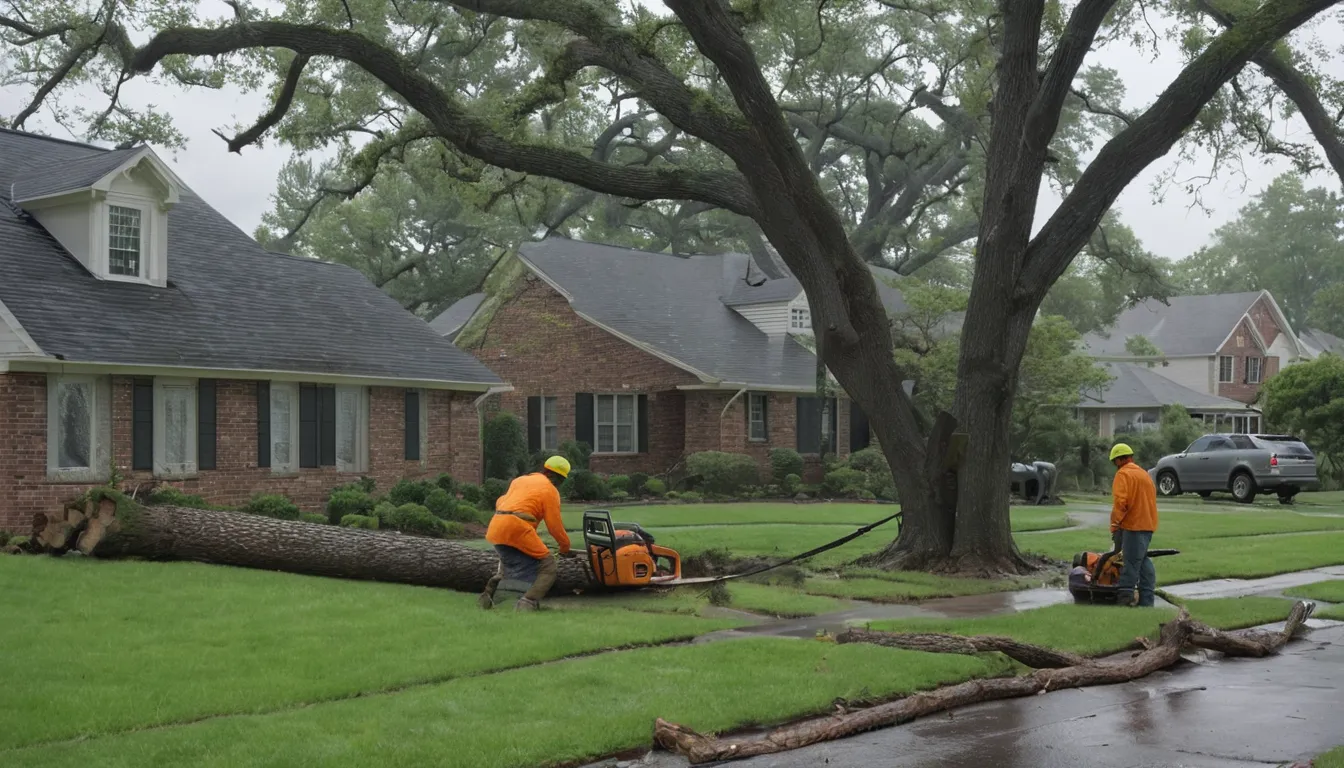
A tree that comes down in a storm can block a driveway, crush a fence or rest on a roof. Some trees stay up but lean, split or hang loose. Both need a careful, ordered response.
Tracksdesperate Tree Service is a referral service. We connect homeowners in the Alpharetta area with independent local providers who handle emergency tree removal and storm tree clearance. The providers do the work. This page lists what to check first, what to tell the provider, and what to watch for afterward. Availability depends on the provider and the weather, so ask when you reach one. Follow the steps in order and you will have a clearer picture before anyone arrives.
First, Look Up: Stay Safe
Before you do anything else, check the sky and the tree. Stay inside if wind or lightning is still active. Thunderstorms and tropical remnants can bring a second round.
Safety Checklist Before You Step Outside
- Look for downed or sagging power lines. Treat every line as live.
- Keep children and pets away from the tree and the yard.
- Stay out from under leaning or hung-up limbs.
- Do not climb on a fallen trunk. Wet bark is slick.
- Do not run a chainsaw on a tree under tension.
What Counts as an Urgent Tree Problem
Some situations need fast attention. Others can wait for a normal appointment. Sort yours into one of these groups.
Urgent
- A tree or large limb resting on the house, garage or a vehicle
- A tree blocking the only way in or out of your driveway
- A trunk caught on power lines
- A tree leaning more than it did yesterday, with soil lifting at the base
Can Usually Wait a Little
- A downed tree in a far corner of the yard
- A broken limb that is fully on the ground
- A cracked branch high up, away from the house
If you are unsure, treat it as urgent. A provider can judge it on site.
Next, Document Everything
Take photos before anything moves. Shoot wide, then close. Include the tree, the damage, and any fence, siding or roofing it touched. Write down the date and time. This helps with estimates and with any claim you decide to file.
Then, Reach a Local Provider
Request a callback to check provider availability in your area. Many providers can respond quickly after storms, but demand is high when a whole region is hit. Be ready with a few facts.
- Where the tree is and how big it looks
- What it is touching
- Whether power lines are involved
- Whether anyone is blocked in
- Photos you can share
How Fallen Tree Removal Works
A tree falling service usually follows the same order on site.
1. The provider checks for lines, gas meters and unstable limbs. 2. Crew members secure the area and set up the rigging. 3. The tree is cut in sections, often lowered with ropes on a house-side job. 4. Logs and brush are cut small enough to move. 5. Debris is hauled away or stacked, depending on the quote.
Trees on Roofs and Siding
Older mill-era houses and newer subdivision homes both take hits differently. A tree on a roof needs careful, staged cutting so weight does not shift suddenly. Brick and vinyl siding can crack or scrape. Ask the provider to note any damage they see as the work proceeds.
Working With Your Insurance
Some policies may cover sudden damage from a fallen tree. Others limit what they pay. Check your policy and call your insurer's claim line. Providers can often help document damage for a claim, such as with photos and a written description of the work. Keep every receipt.
After a Big Storm: What to Expect
When many homes are hit at once, providers stack their schedules by danger level. Houses with structural damage and blocked roads come first. Yard trees come later. Ask for a realistic window instead of a promise, and ask what to do if conditions change.
- Expect to wait if the damage is wide.
- Expect the provider to rank jobs by safety.
- Expect a quote to change if the tree is tangled in wires.
Fix It, Then Watch: After the Tree Is Gone
Once the trunk is cleared, run through this short list.
1. Look at the roof, gutters and siding for hidden damage. 2. Check the fence, shed and any buried lines in the yard. 3. Look at crawl-space vents and slab edges near where the tree stood. 4. Ask about the stump. Stump grinding can be scheduled later.
Small Signs First: Preventing the Next Storm Problem
Most storm failures start with a quiet warning. Walk your yard each season and watch for these.
- Dead branches or bare crown tips in summer
- Mushrooms or soft spots at the base
- Cracks in the trunk or a split fork
- Roots lifting or a new lean
- Limbs rubbing the roof or hanging near wires
Hot humid summers and the odd ice storm stress trees. A provider can inspect a tree you worry about before the next storm.
Questions to Ask the Provider
- Is the quote in writing, and what does it include?
- Is debris hauling part of the price?
- Will the crew protect the lawn and roof?
- Can you document damage for my insurer?
- What happens if the job runs longer?
When You Are Ready
If the tree is stable and nobody is at risk, you can also request an estimate and compare. Take your time on a non-urgent job. Move fast on an urgent one, but keep safety first.
What's Included
Fallen Tree Clearance
Providers cut and remove trees that have come down on yards, driveways, fences or homes.
Hazard Tree Takedown
Leaning, split or storm-damaged trees can be taken down in sections before they fall.
Limb and Debris Removal
Broken limbs and hung-up branches are cut, bundled and hauled away as the quote allows.
Damage Notes
Many providers photograph and describe damage to help with your claim paperwork.
Typical Emergency Tree Removal Costs
Prices vary by tree size, access, hazards and demand after storms. These are typical U.S. ranges only. Always ask for a written quote before work begins.
| Job type | Typical range | Notes |
|---|---|---|
| Small downed tree in open yard | $300 – $900 | Easy access, little rigging |
| Medium tree blocking driveway | $800 – $2,000 | Cutting and hauling both priced in |
| Large tree on open ground | $1,500 – $4,000 | Size and trunk weight drive price |
| Tree on house or roof | $2,000 – $8,000+ | Needs staged cutting and extra care |
| Tree tangled in power lines | $1,500 – $5,000 | Utility coordination may be needed |
| Debris hauling and cleanup | $200 – $1,000 | Often a separate line on the quote |
How It Works
Stay Clear
Keep people and pets away from the tree, and treat all downed lines as live.
Take Photos
Capture the tree and damage from several angles before anything moves.
Contact Provider
Request a callback to check availability or send an estimate request.
Review and Follow Up
Get a written quote, then inspect the area after the work.
Why Call Tracksdesperate Tree Service
Clear Order of Steps
A numbered plan helps you act in the right order while stress is high.
Local Providers
Independent providers know area trees, soils and storm patterns.
Honest Process
The referral is plain: providers do the work and set their own prices.
Follow-Up Checks
Simple lists help you catch hidden damage after the tree is gone.
Other Services
Need emergency tree removal in Alpharetta?
Questions about a tree, a stump or storm damage? Send the request form and a local provider in our network can follow up with you.
Emergency Tree Removal FAQ
- What should I do first when a tree falls on my house?
- Get everyone out of the damaged area and stay away from any power lines. Take photos from a safe spot, then contact a local provider to check availability and describe the damage.
- Does homeowners insurance cover emergency tree removal?
- Some policies may cover sudden damage from a fallen tree, especially when it hits a structure. Coverage differs by policy and cause, so check your terms and call your insurer. Providers can often help document damage for a claim.
- How quickly can a provider come out for a fallen tree?
- It depends on the provider, the weather and how many homes were hit. Many providers can respond quickly, but jobs with danger to people or buildings tend to be scheduled first. Ask for a realistic window when you reach one.
Tell us what happened
Questions about a tree, a stump or storm damage? Send the request form and a local provider in our network can follow up with you.
No obligation